
What is internal communication?
Internal communication refers to passing on data, information, files, and updates that don’t leave the confines of the company. This communication has many forms, from work emails to project details or even entire servers and information silos that only employees (or even just a subsection of the team) can access at any time.
At their core, all internal communication methods serve four main purposes:
- Increasing clarity between employees to ensure everyone is on the same page
- Separating data the company uses in private processes and pipelines from the products and services presented to the public and clients facilitates stakeholder engagement strategies.
- Improving productivity by speeding up fetch rates and data retention
- Preventing vital information from leaving the confines of the company, team, or company’s organisational layer
In turn, these processes affect the employees at pretty much every level of the organisation’s hierarchical structure:
- Executives and senior management can get accurate, near-real-time insights on the company’s progress and KPIs.
- Team leads and managers can more effectively navigate between various tasks and ensure a smoother workflow.
- Frontline employees can use relevant, up-to-date information to handle vital customer data and improve the company’s range and effectiveness of services.
From there, the actual communication methods can be categorised as bottom-up, top-down, peer-to-peer, and special “crisis management” methods that bypass the organisational structure and include all team members.
Why is secure internal communication important?
Even in a small company, most data that employees handle on a daily basis can be (and should be) considered confidential. This goes double for industries that have specific privacy requirements, such as the UK government security classification – official sensitive.
This means that any channel used for teams to communicate with one another is a potential treasure trove of information on the company’s clients and proprietary designs.
Do you even know how much data your company actually has at its disposal? Sure, you can check how much storage space your server or cloud service is taking up, but that will usually be only a fraction of the real number. According to AvePoint, close to two-thirds of organisations manage over 1 PB of data (that’s one petabyte, a thousand terabytes or TBs).
And most of that data is not exactly safe where it is. While you might think you might be trying your best, even internal communication methods, those that should not leak into the world outside of the company pose a threat to having that information dispersed or even stolen from the business. But if you’re thinking, “Hang on, I run a small business, surely I’m not going to be hacked,” well, think again. Small and medium-sized businesses are disproportionately affected by rising cyber threats. It’s all about the scale and the means. A small business likely won’t have the robust infrastructure capable of preventing more advanced types of cyber warfare.
That’s why it’s important to safeguard your company information from prying eyes. With that in mind, your first line of defence should be controlling how that information is disseminated throughout the company.
Here is just some of the information that your company could be left wide open for intruders to take:
- Employee personal data, such as payroll, medical records, performance reviews, and other proprietary information that the company uses to assess them
- Business data, such as contracts, business plans created in business plan software, trade secrets, and intellectual property.
- Client data, such as banking information, security details, the client’s own IPs and trade secrets, or confidential correspondence
This is likely leaving you with a question or two. Are there any secure methods of communication in the workplace, and if so, how do you implement them? The secret lies in creating an intranet, a separate network that only the company should be able to access. While the intranet can be connected to the internet, the encryption between the client (i.e. the user) and the servers should alleviate most security concerns. But that’s only the beginning.
Methods of an effective internal communication strategy
While there are over a dozen different methods for team members to communicate (and each of which could fall into more than one of the aforementioned categories), only some of them could be considered secure, and only with proper implementation and safeguarding.
Secure collaboration platform
One of the foremost ways a company can protect its interests and improve cybersecurity is by eschewing traditional online communication options like WhatsApp or unsecured apps. A business-grade internal communication and document collaboration tool should be relatively simple to use, with an interface similar to those of messaging apps, while simultaneously using cybersecurity protection such as end-to-end or user-to-server encryption.
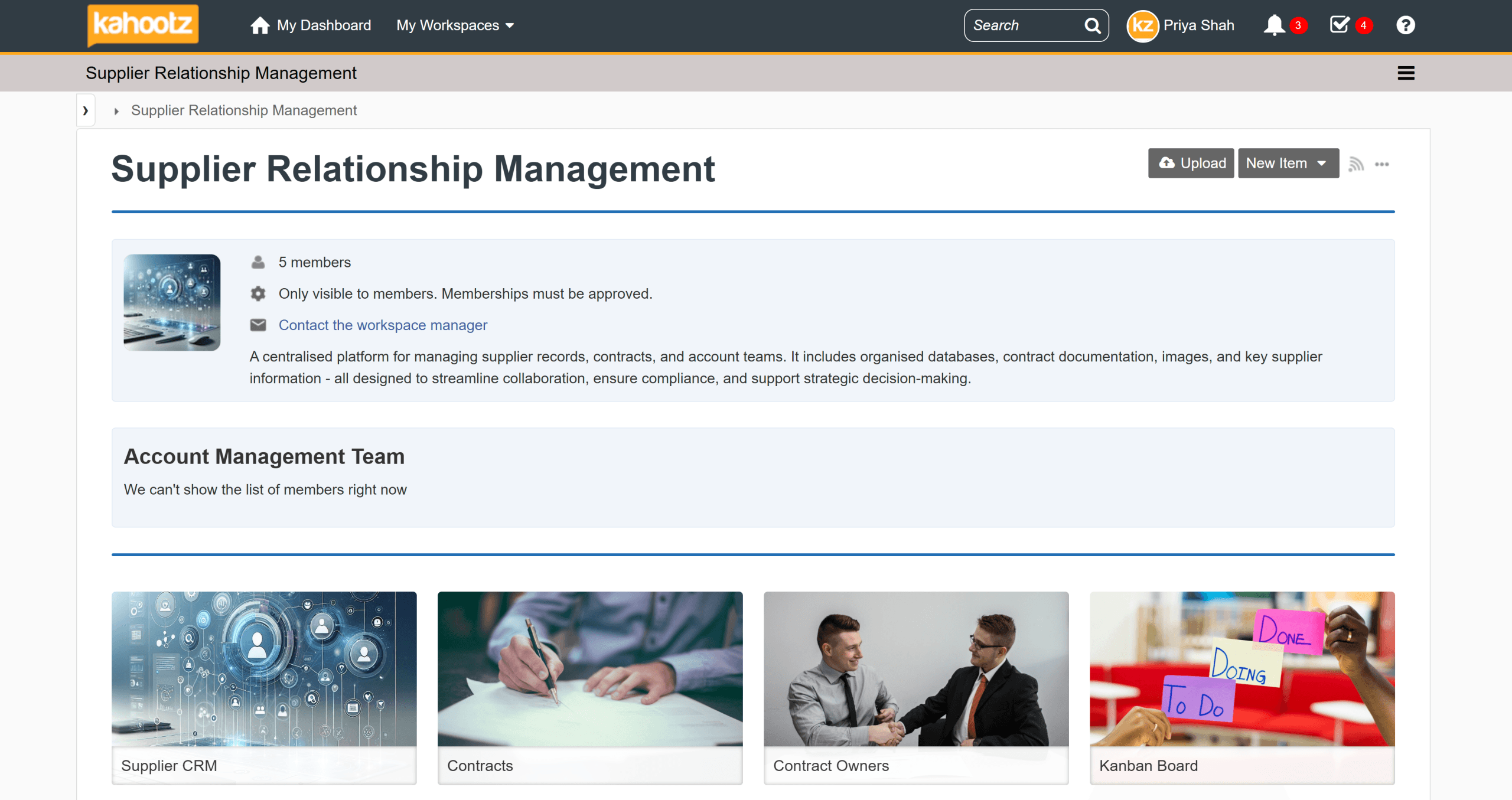
At the same time, a platform needs to be useful enough to cover multiple different communication methods, such as peer-to-peer messaging, secure business file sharing, voice calls, or even video conferencing. Additionally, collaboration platforms can function as company- or team-wide dashboards, providing real-time information on the status of every vital project, file, and pipeline that the team is handling.
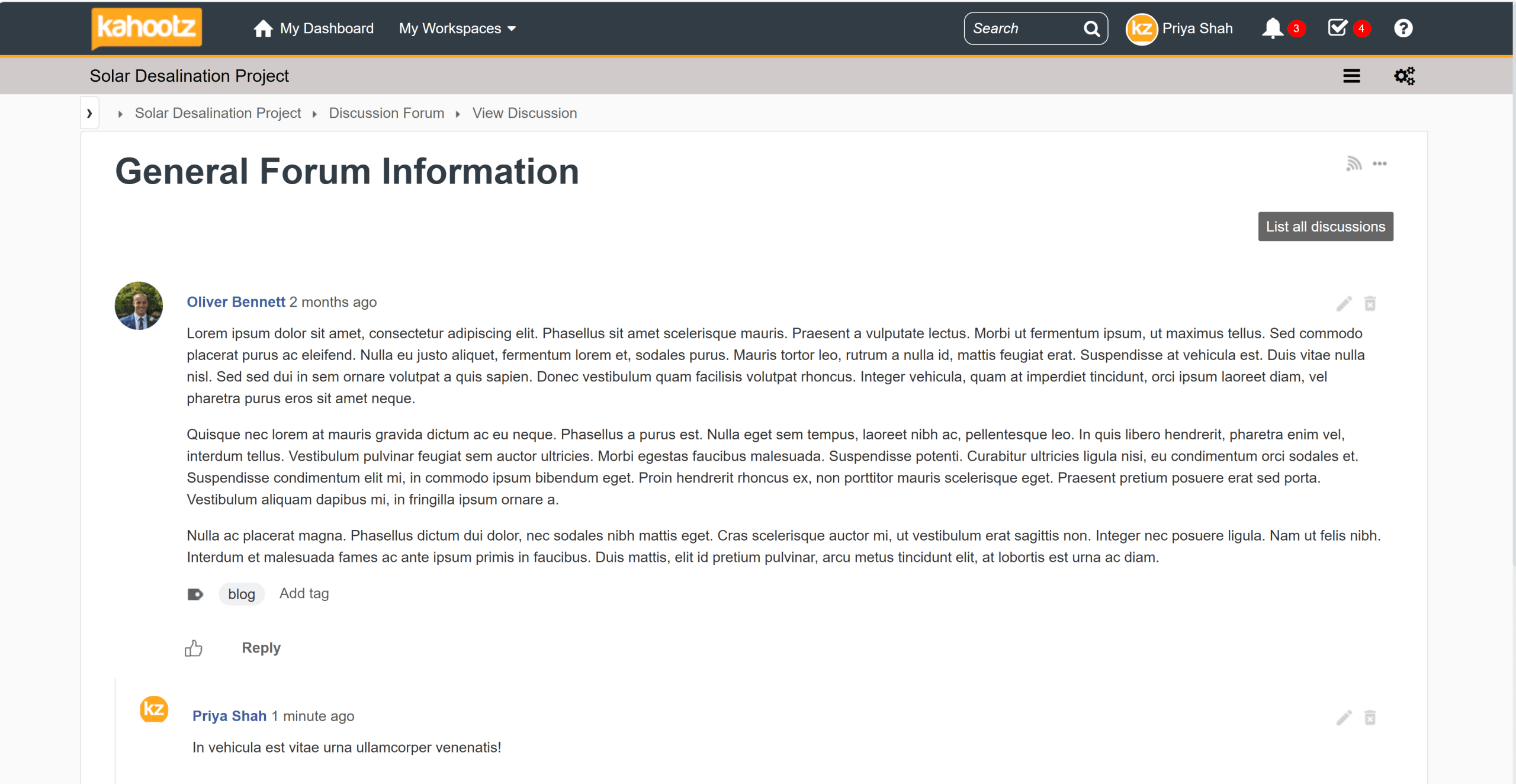
The most common examples of collaboration platforms include Asana, Slack, Microsoft Teams, or Kahootz, although the actual scope of the tools can vary. Slack or Teams (as its name might suggest) is typically used for internal communications only. Kahootz, on the other hand, contains more robust security protocols that allow it to be used simultaneously by companies, clients, and suppliers, with specific features in place to prevent data and information leakage.
Enhance Your Communication Without Compromising Security With Kahootz—Get the Guide!
Implementing password protocols and phishing training
A company’s cybersecurity is only as strong as its weakest link. Today, that link is the human factor. Employees fail to properly secure their information or do not abide by common security standards when dealing with proprietary information, so they are risking not only their own but the company’s information.
There are a few common ways this can be abused by third parties, from outright data theft through password breaches to phishing scams that have the victim directly hand over potentially devastating information. Implementing tools like Psono as a password manager can help reduce these risks by enforcing stronger credential practices and minimizing human error.
In terms of password protocols, there are several ways to make strides for more secure account credentials:
- Using longer, more complex passwords, as length directly increases protection from brute force attacks
- Enforcing the use of random password generators, which typically create long and difficult-to-predict character strings
- Avoiding using common passwords or regular words and personal information inside passwords
- Establishing a regular password audit or a timeline for periodic password update
For phishing protection, there are a few ways forward:
- User awareness training, typically done through the company’s IT using mock-phishing mail to conduct randomised testing and check the online literacy and security of their team members. Training materials and slides can be prepared to help team members learn effectively. Presentations can then be built with a presentation API to make delivery easier and track engagement.
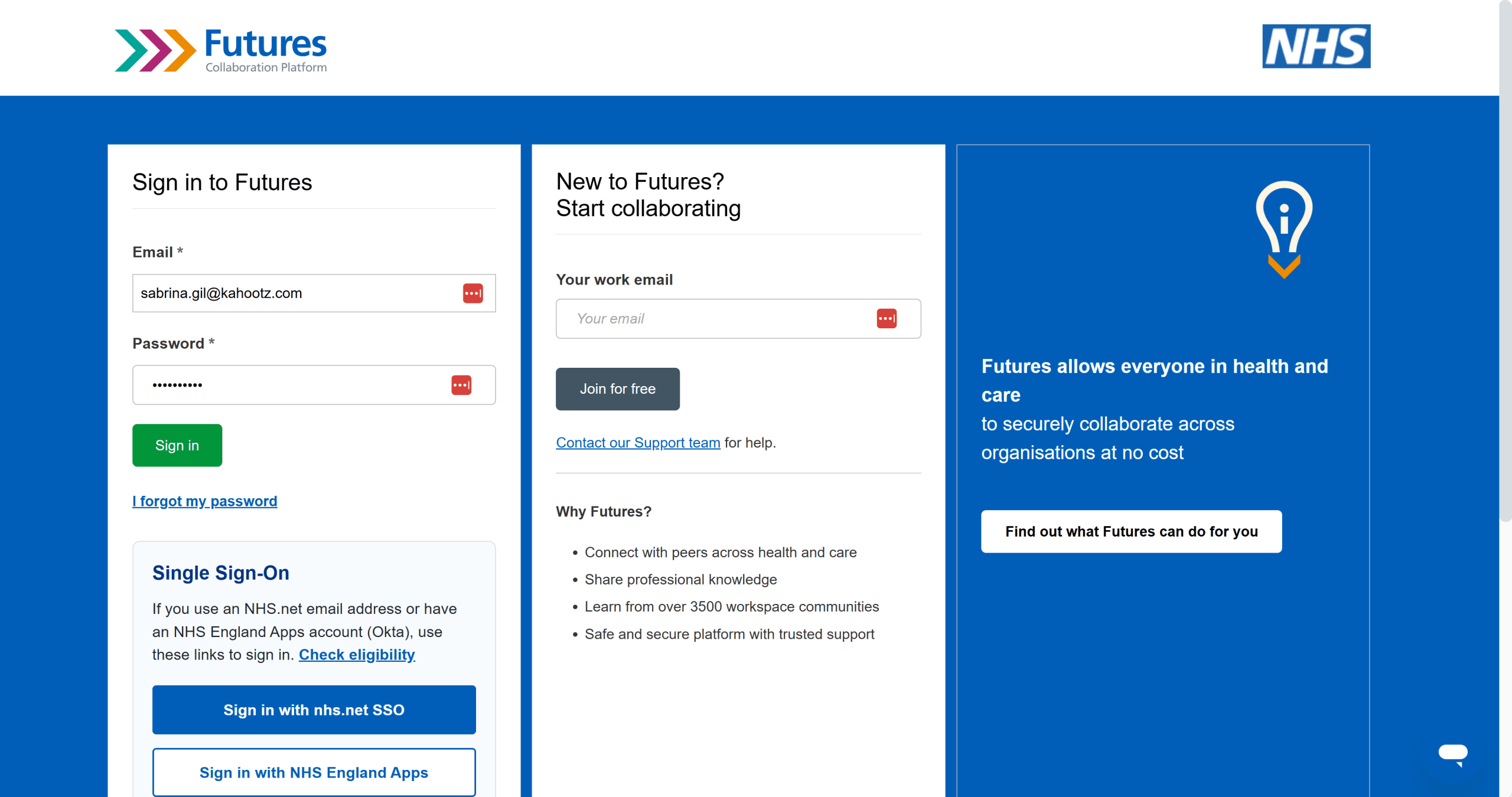
- Implementing multi-factor authentication, where users need to access an additional program (typically a phone app) to log into their accounts, which prevents someone else from logging with their credentials even if they get stolen
- DMARC (Domain-based Message Authentication, Reporting, and Conformance) creates a special “trace” on correspondence sent from a domain, such as the company’s verified email, that uniquely identifies it as belonging to that organisation. Phishing attacks that attempt to use similar-looking credentials will fail to have that implemented, which allows them to be automatically filtered by the system.
Intranet and VPNs
An intranet is a “localised” version of the internet, where the only information stored is pertinent to the organisation. It functions similarly to any other server but is typically created with more robust encryption and security methods to prevent unauthorised access.
One of the benefits of intranet infrastructure is that it can still be hosted on the cloud, allowing for fully remote collaboration and internal communication on any level. The files and information that the intranet stores could be additionally secured to prevent unauthorised downloads or tampering.
In a way, VPNs (virtual private networks) are an extension of this concept. With a VPN, actions on the internet (or the intranet) are masked with another layer of protection, using an encrypted data channel between the user and the server to prevent man-in-the-middle attacks.
Roles and responsibilities in internal communication
While technology (and, to a lesser extent, automation) will form the basis of any company’s cyber security structure, including those inherent in internal communication methods, it is the people who make up the company who need to use, depend on, and monitor the set-out structures.
There are four broad groups of team members who each have a vital role to play in ensuring that the transformed methods of communication in the workplace actually remain secure:
- The senior management (C-suite) is responsible for setting policies on access control, i.e. providing fragmented access to the company’s intranet and cloud infrastructure depending on role, need, and seniority.
- The IT teams are responsible for implementing secure platforms, updating system credentials and security practices, and monitoring and preventing threats. They are typically also the ones performing user training.
- Management acts as the bridge between the senior management and front-line employees, following the implemented security protocols and ensuring compliance with the goals and restrictions imposed by the secured internal communication methods.
- All employees must remain fully cognisant of their contribution to the security of not only their own information but that of the data of the entire company and its clients.
Internal communication planning – how to choose your next platform?
Internal communication platforms generally have to satisfy only a few criteria, even if that might seem somewhat strange. However, these requirements rapidly grow in scope if your business has additional data security concerns, such as confidentiality and client protection:
- Modern encryption: The AES-256 encryption has been the golden standard for cybersecurity for decades. However, recheck that the encryption covers all forms of communication, such as direct messaging, internal company boards, file sharing, and voice and conference calls.
- Hosting: Two different server implementations are most common. On-site hosting creates the server inside your company’s premises, with the company’s IT typically being responsible for ongoing management and maintenance. Remote hosting (typically via cloud) offers more scalability at the cost of limited control of features you can receive. For organizations that need a balance between scalability, security, and ease of management, solutions like ScalaHosting cloud hosting provide managed cloud infrastructure with built-in security protections, scalable VPS resources, and 24/7 support. This allows businesses to host internal collaboration tools, intranets, and business-critical applications without the complexity of maintaining on-premises server infrastructure.
- Budget: One of the biggest benefits of using cloud providers for collaborative tools is per-user budget scaling. It allows a company to purchase the exact plan they need for the number of members they plan to have. Then, when the company grows, it can renegotiate the terms or add new members relatively easily.
- Application security: As with encryption, the security of the platform itself makes up a big portion of its trustworthiness and effectiveness. For example, Kahootz is certified to ISO 27001, which signals that the company is using up-to-date international standards or government-backed systems like the CHECK, which the UK’s security department performs.
- Usability: As mentioned, a platform is as secure as its members. That’s why your internal communication tools need to be easy to use, with the necessary checks and restrictions built into the background and managed by trained professionals to prevent misuse and human error.
Don’t leave security to chance—get a free demo of Kahootz now!
Securing your company’s future through internal communication method overhauls
With cybersecurity one of the most pressing concerns of the decade, don’t wait to implement internal communication, collaboration, and monitoring tools. They will not only help your private and confidential business stay as such but will also skyrocket your team’s productivity and interconnectedness.